Morgan Chapel
The Captain and Ann BarbaraMorgan Chapel is the most consequential public space on Wheeler Street in Mary Antin’s childhood recollection: a chapel whose Saturday entertainments transform a crowded neighborhood of saloons, pawnshops, gloomy tenements, and crooked alleys into a place of music, spectacle, aspiration, and moral work. Mary’s changing judgment of the building and its workers records her own movement from suspicion toward a broader understanding of how different people may serve the same human needs.
Setting and Neighborhood Function
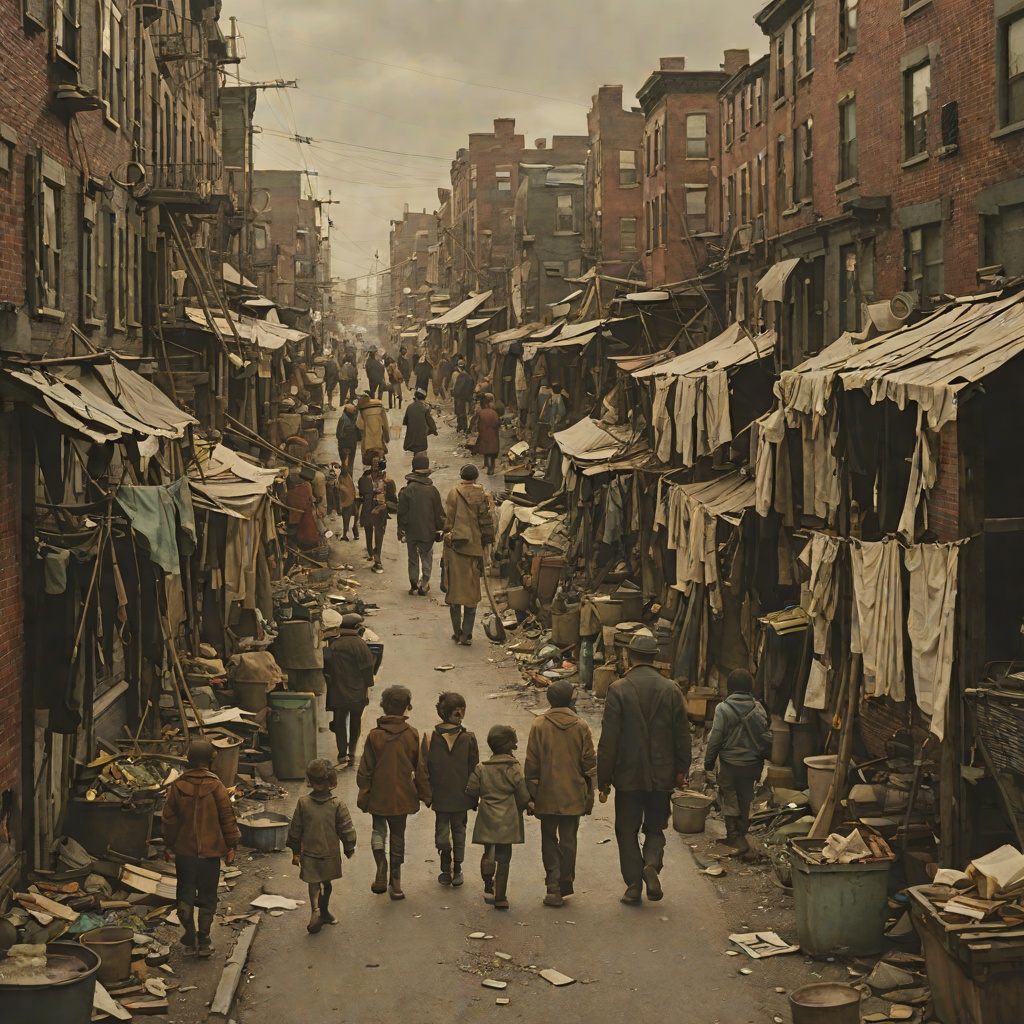
Morgan Chapel stands out amid the harshness of Wheeler Street. The children of the neighborhood, apart from the most disorderly, flock there at least once a week, especially on Saturday evening, when the chapel offers free entertainment. Its importance is therefore practical as well as religious: it gives children somewhere to go besides the sidewalk in front of the saloon, where Mary and other young people might otherwise spend the evening. The chapel becomes a shared neighborhood destination, drawing together children, working adults, performers, and men who initially enter with suspicion or defiance.
The chapel’s social setting also explains why its programs matter. Mary describes Wheeler Street as a place of crooked alleys, saloons, pawnshops, and gloomy tenements, and later understands Morgan Chapel as an institution placed deliberately in the middle of that environment. Its doors open not onto an abstract religious community but onto a difficult urban neighborhood whose residents need cleanliness, order, diversion, and some credible vision of a better life.
The Saturday Entertainments
The Saturday program is explicitly presented as entertainment rather than disguised preaching. Music, recitations, and other accomplishments fill the hour, and the performances seem to the children exceedingly artistic. Mary and the other children from Number 11 hang on the lips of beautiful ladies who read or sing, admire the clean gentlemen who sing or play, and watch little girls in golden curls, frilled petticoats, and silk stockings recite comic or pathetic pieces with trained expression and practiced gestures. To the children, these performers possess the perfection of the elocutionary art.
The effect exceeds simple amusement. The children become slightly stage-struck, but Mary also recognizes that the music and poetry reveal a fairer world than the one surrounding them: a world inhabited by beautiful ladies, fairy-like children, and clean gentlemen. Morgan Chapel thus operates as a theatrical threshold. Its performances do not erase Wheeler Street, but they interrupt the neighborhood’s ordinary visual and moral landscape, allowing children to imagine forms of beauty, refinement, and social conduct otherwise remote from their daily experience.
Brother Hotchkins, who manages the entertainments, understands this power and shapes the program with deliberate skill. He intersperses lighter classics with the popular street songs of the day, maintaining a careful balance between culture familiar to the neighborhood and culture that enlarges its horizons. Nothing in the program overtly savors of the chapel; the hour is honestly devoted to entertainment. That decision makes the building accessible to people who might resist a religious meeting while still creating an atmosphere in which attention, admiration, and even moral receptivity can develop.
Performers, Audience, and Discipline
The audience itself becomes part of the chapel’s drama. Men with purple noses, bristling chins, no collars, and skeptical expressions enter tentatively and sit at the edge of the rear settees. As the program continues, some move toward the front and join the applause. Others arrive with defiant faces and later leave shamefaced; some remain afterward to hear Brother Tompkins pray and preach. The transition is not forced by an argument. It is produced through the gradual accumulation of pleasure, wonder, and longing generated by the program.
Brother Hotchkins controls this movement with conspicuous efficiency. He introduces performers, manages the bad boys, and announces each number from a slip of paper. The few toughs who come in specifically to make trouble are expelled by him and his lieutenants. Mary admires the precision of every part of his work, from the bulletin-board notices to the handling of the audience, even while she dislikes him personally. The chapel’s order is therefore not passive: it is actively staged and defended.
At the end of the entertainment, Brother Hotchkins invites everyone to remain for a short prayer service, followed by refreshments in the vestry. Mary habitually escapes before Brother Tompkins can begin, while the shuffle of feet and the roar of electric cars outside swallow the rest of the announcement. Her departure establishes a sharp boundary between the secular pleasure she accepts and the Christian ritual she rejects. Yet the chapel’s invitation remains important precisely because it joins these two activities without making the first merely a pretext for the second.
Mary’s Changing Judgment
As a child, Mary cannot abide Brother Hotchkins. His pale complexion, restrained smile, encouraging voice, and missionary identity make him seem threatening, not because he harms her, but because he represents a religious tradition outside her Jewish inheritance. She understands her distrust as the response of a European Jew shaped by centuries of exclusion and suspicious of anyone who speaks of God by a name other than Adonai. The chapel consequently becomes a site of divided response: its art attracts her, while its missionary purpose repels her.
Her family’s weakened discipline allows the children to visit freely. Joseph sells newspapers after school, Mary sweeps and washes dishes, and Dora minds the baby, while their parents remain absorbed in the struggling store. Their mother has no time to formulate objections to a building marked by a cross; their father dismisses the subject sarcastically and asks whether the children intend to join the Salvation Army, but does not seriously interfere. Morgan Chapel is therefore also a symptom of the family’s unsettled American life. In Polotzk, the children had been trained, watched, and regulated; in America, after their father’s renunciation of faith and their mother’s uncertainty, they are abruptly released onto the street. The chapel fills part of the vacuum created by that collapse of domestic religious discipline.
Mary’s mature perspective reverses her childhood verdict without denying the earlier feeling. If she returned to Morgan Chapel, she would stay to hear Brother Tompkins pray and would silently join the Amen. She now understands what Wheeler Street is and what the chapel is there to do. Its labor is figured as the application of soap and water: practical cleansing performed continuously in a place where disorder and deprivation are ordinary conditions. The metaphor shifts the chapel from a rival creed to a form of social service.
The mature Mary also abandons the assumption that her own method is the only valid one. Brother Hotchkins must pray, Mary must bear witness, and another person must nurse a feeble infant; each works with the tools suited to that person’s nature. The chapel’s value consequently lies less in proving its theology than in demonstrating that honest work can take different forms. Only the idle scoffers, who stand aside and jeer at efforts to cleanse the common house, deserve expulsion in her revised judgment.
Narrative Significance
Morgan Chapel condenses several of the memoir’s central contrasts: poverty and beauty, street freedom and institutional discipline, inherited suspicion and acquired tolerance, religious division and shared civic purpose. Its performances offer the children a glimpse of a better world, while its managers convert that glimpse into organized conduct by protecting the audience, structuring attention, and inviting people into prayer and fellowship.
The location also gives architectural form to Mary’s changing American identity. As a child, she experiences the chapel as both attraction and boundary: she belongs among the spectators but refuses the service that follows. As an adult narrator, she can return imaginatively to the same room and recognize value in the work she once dismissed. Morgan Chapel therefore marks not a conversion to Christianity, but a widening of moral perception. Its decisive lesson is that social usefulness may survive disagreement over doctrine, and that a person who once defended one exclusive way of serving humanity can come to respect several roads toward the same goal.